Kaorta® Protocol

Educate Me

Most AFib treatments manage the symptoms. We're focused on something different: addressing what's causing them in the first place.

Educate Me

What's Really Happening in AFib?

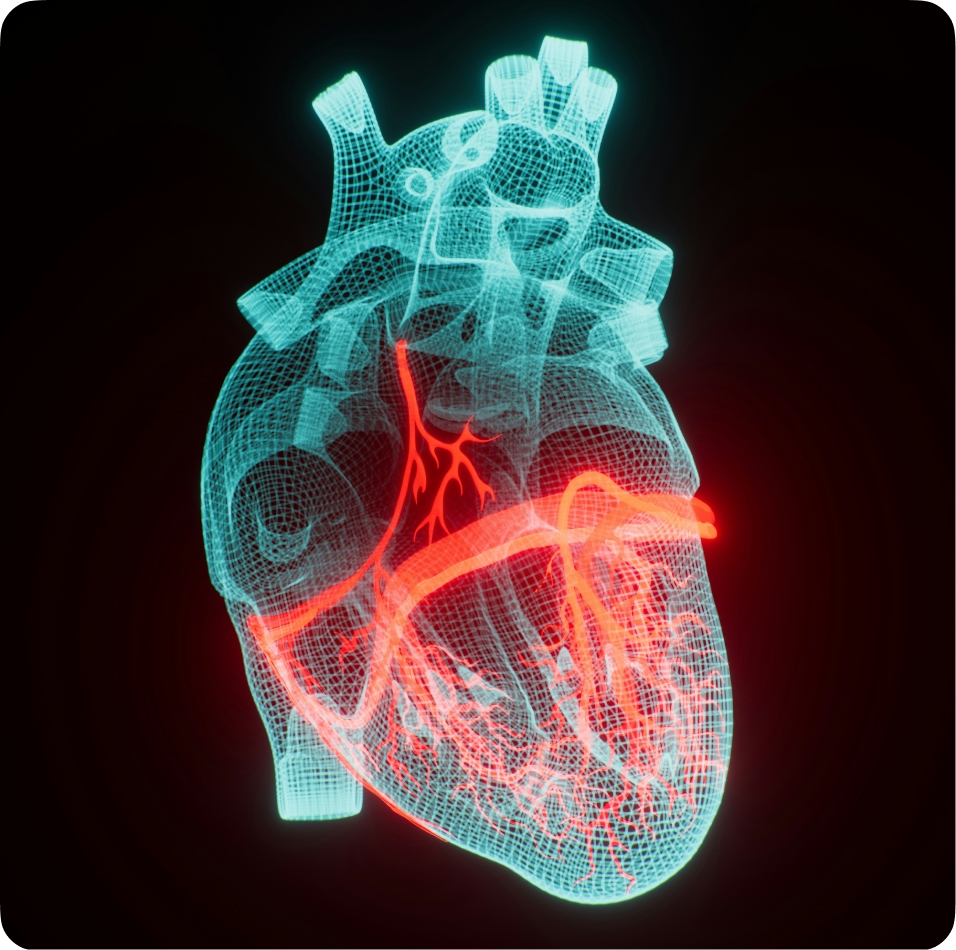
Nerves tell the heart when to beat. When those nerves are inflamed, the timing turns chaotic and the atria quiver instead of pumping. Each episode adds more inflammation and scarring, raising the risk of stroke and CHF.

AFib isn't really a heart problem. It's a nerve problem that appears in the heart.

Where Kaorta® fits

Standard care works downstream: slowing the rate, steadying the rhythm, thinning the blood, scarring the tissue. Kaorta® works upstream. A single IV infusion of PVC (perivascular) cells supports the body's effort to repair the nerves so the signal can steady on its own.

Age Of Diagnosis Is Critical

The earlier AFib starts, the more it takes. Patients diagnosed before age 50 can lose 9 to 11 years of life, more than any other age group, because they live with the cumulative risks for longer.

What those risks look like

AFib drives up to 20% of all strokes, since pooled blood in the quivering atria forms clots that can reach the brain. It also leads to heart failure, palpitations, fatigue, dizziness, and chest pain. Each episode adds inflammation and scarring, making the next one more likely.

Compare Your Options

Kaorta® Treatment
Surgical Ablation
Rate-Control Meds
Rhythm-Control Meds
Anticoagulants
Catheter Ablation
Advanced comparison table for Kaorta, medication, and ablation.
Comparison TopicKaorta® TreatmentSurgical AblationRate-Control MedsRhythm-Control MedsAnticoagulantsCatheter Ablation
What Each Option Does
Primary goal

Primary goal

Targets perivascular inflammation along the autonomic pathways modulating atrial conduction and contractility

Root Cause Focus

Primary goal

Cox-Maze lesion sets, hybrid epicardial-endocardial Convergent procedure, or AV-node ablation with permanent pacemaker for refractory cases

Primary goal

Slows AV-nodal conduction to reduce the ventricular response during AFib episodes

Primary goal

Pharmacologic maintenance of sinus rhythm via Class Ic, Class III, or multichannel-blocking agents

Primary goal

Reduces thromboembolic stroke risk by inhibiting clot formation in the left atrial appendage

Primary goal

Pulmonary-vein isolation (PVI) by radiofrequency, cryothermal, or pulsed-field energy to silence ectopic triggers

Common examples

Common examples

Single IV infusion of autologous or donor-derived PVC (perivascular) cells, processed at BrioMD Labs prior to administration

Single Infusion

Common examples

Cox-Maze IV (full surgical Maze)

Hybrid Convergent (epicardial + endocardial)

AV-node ablation with permanent pacemaker

Common examples

Beta blockers: metoprolol, bisoprolol, atenolol

Non-DHP calcium channel blockers: diltiazem, verapamil

Digoxin in select sedentary or HFrEF patients

Common examples

Class III: amiodarone, sotalol, dofetilide, dronedarone

Class Ic: flecainide, propafenone (without structural heart disease)

Common examples

DOACs: apixaban, rivaroxaban, dabigatran, edoxaban

Warfarin with INR target 2.0 to 3.0

Common examples

Radiofrequency ablation

Cryoballoon ablation

Pulsed-field ablation (PFA)

Treatment format

Treatment format

Outpatient IV infusion in a controlled clinical setting, physician-administered

Outpatient IV

Treatment format

Open sternotomy, thoracoscopic, or hybrid Convergent procedure, or AV-node ablation with permanent pacemaker implantation

Cardiac Surgery

Treatment format

Daily oral therapy, often combined with rhythm-control or anticoagulant agents

Treatment format

Daily oral therapy. Sotalol and dofetilide require inpatient initiation with continuous QT monitoring.

Inpatient Initiation

Treatment format

Daily oral therapy, indefinite once initiated, with periodic kidney function checks

Treatment format

Catheter-based intervention under conscious sedation or general anesthesia, typically same-day or one-night admission

Anesthesia
Patient Experience
Time to reported effect

Time to reported effect

Many patients report changes within 1 to 2 days. Responses vary.

1 to 2 Days

Time to reported effect

Several weeks to months of recovery, depending on the procedure

Long Recovery

Time to reported effect

Within hours, while the medication is active

Time to reported effect

Days to weeks, depending on the agent

Time to reported effect

Stroke-risk reduction begins within days. No symptom change.

Time to reported effect

Initial recovery takes weeks. Final rhythm picture is judged after a 3-month blanking period.

Months to Settle
Repeat treatment

Repeat treatment

Additional infusions may be scheduled based on response and clinician guidance

Repeat treatment

Generally a one-time procedure, with medication and follow-up afterward

One-Time Procedure

Repeat treatment

Continues as prescribed. Doses adjust over time.

Repeat treatment

Continues as prescribed. Drug class often changes if effect fades.

Repeat treatment

Continues indefinitely once started, unless reassessed by a cardiologist

Repeat treatment

Repeat ablation is common, particularly for persistent AFib

May Repeat
Ongoing management

Ongoing management

Follow-up through the patient's cardiologist

Routine Follow-Up

Ongoing management

Ongoing cardiology and pacemaker checks where applicable

Ongoing management

Ongoing dosing, monitoring, refills, possible switches

Ongoing management

Routine ECGs, lab work, and organ-toxicity monitoring with agents like amiodarone

Toxicity Monitoring

Ongoing management

Bleeding-risk monitoring, periodic kidney function checks. INR testing for warfarin.

Bleeding Watch

Ongoing management

Rhythm monitoring, often with extended ECG patches

Care Requirements
Before treatment

Before treatment

Clinical review, harvest planning, lab processing, infusion scheduling

Before treatment

Full cardiac evaluation. Often combined with another cardiac surgery.

Surgical Workup

Before treatment

Prescription based on history, blood pressure, heart-failure status, and other conditions

Before treatment

Choice depends on structural heart disease, kidney function, QT interval, and prior agents

Before treatment

Stroke-risk score, bleeding-risk score, kidney function

Before treatment

Cardiac imaging, mapping plan, anesthesia clearance

Invasiveness

Invasiveness

IV infusion after the harvest and processing steps

IV Only

Invasiveness

Cardiac surgery, or a separate ablation plus implanted pacemaker

Procedure-Based

Invasiveness

Non-procedural. Daily systemic medication.

Invasiveness

Non-procedural. Daily systemic medication, with broader organ effects.

Invasiveness

Non-procedural. Daily systemic medication.

Invasiveness

Catheter procedure inside the heart

Procedure-Based
Common risks or side effects

Common risks or side effects

No known side effects have been reported. Patients are monitored during and after the infusion.

None Reported

Common risks or side effects

Standard cardiac surgery risks. Pacemaker dependence after AV-node ablation.

Surgical Risks

Common risks or side effects

Fatigue, low heart rate, low blood pressure, dizziness. Some agents are avoided in heart failure.

Common risks or side effects

Proarrhythmia risk

Long-term thyroid, lung, liver, eye, and skin effects with amiodarone

QT prolongation with sotalol and dofetilide

Organ Toxicity

Common risks or side effects

Bleeding, with intracranial bleeding the most serious concern

Bleeding Risk

Common risks or side effects

Vascular access complications, pericardial effusion, phrenic nerve injury, rare atrioesophageal fistula

Procedure Risks
Limits to Consider
Main limitation

Main limitation

Requires clinical eligibility review, tissue harvest, lab processing, and scheduled infusion. Adjunctive to ongoing cardiology care.

Main limitation

Reserved for refractory cases or concomitant cardiac surgery. AV-node ablation creates lifetime pacemaker dependence.

Reserved Cases

Main limitation

Symptomatic control only. The patient remains in AFib with attendant stroke risk and ongoing atrial remodeling.

Symptom Only

Main limitation

Long-term rhythm maintenance is modest. Efficacy declines and proarrhythmia risk persists with continued exposure.

Effect Fades

Main limitation

Stroke-risk reduction only. No effect on rhythm, rate, or atrial substrate. Bleeding risk persists for the duration of therapy.

Stroke Risk Only

Main limitation

Recurrence is common, particularly in persistent and long-standing persistent AFib. Repeat ablation rates of 20% to 40% are reported.

Often Repeats
Educational Articles

Understand AFIB, solutions and more

Considering Kaorta® for Yourself or a Family Member?

Set up a consult and review the treatment schedule, travel plans and next steps.

Loading Contact Form...